
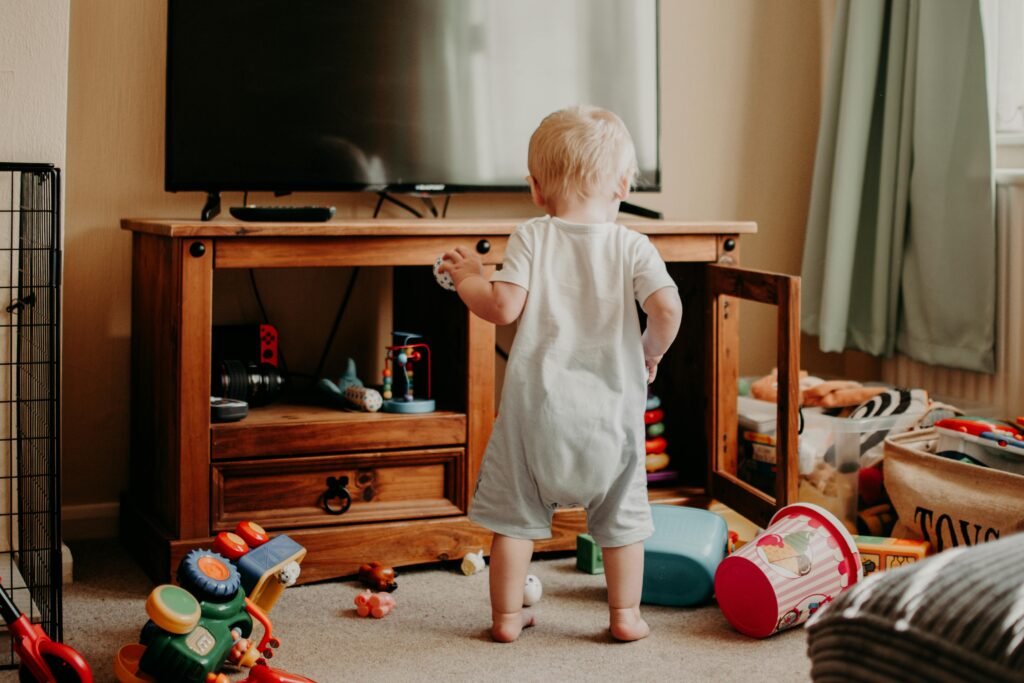
Montessori toys and activities are designed to encourage independent play by fostering curiosity, problem-solving, and hands-on learning. Unlike flashy, battery-operated toys, Montessori materials focus on simplicity and purpose, helping toddlers develop fine motor skills, concentration, and confidence. Activities like stacking blocks, sorting objects by color or shape, and sensory play with natural materials allow toddlers to explore at their own pace while building essential life skills. By setting up a prepared environment with age-appropriate, open-ended toys, parents can empower their little ones to engage in meaningful play without constant assistance, promoting independence and creativity.
1. Ball in the box
What I use:
- Lovevery Magic Tissue Box
- Balls of different textures and colors
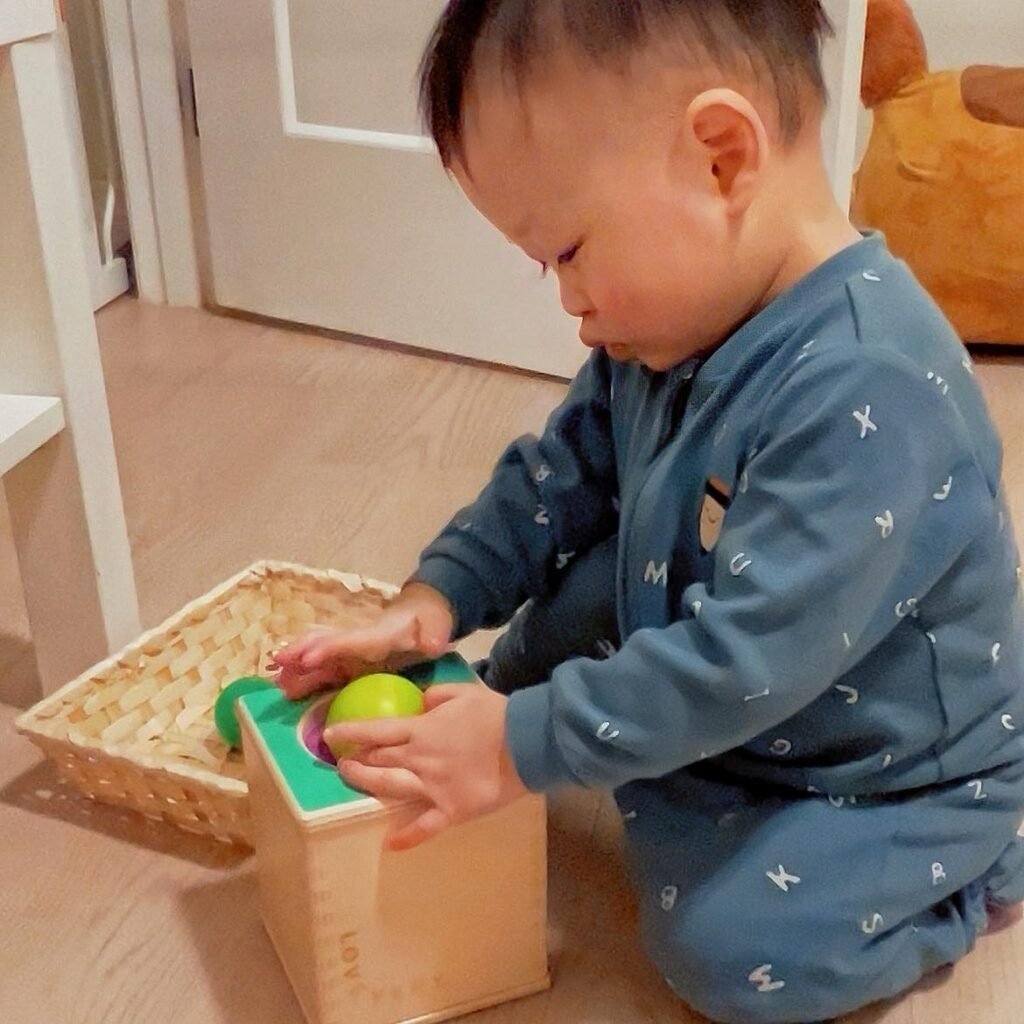
My toddler’s favorite Montessori-inspired activities is the “Balls in a Box” game. I set it up using the Magic Tissue Box in one of Lovevery’s play sets, but you can also use a simple tissue box or an empty milk powder can with a hole cut on top. My child loves picking up small balls and dropping them through the hole, which helps improve hand-eye coordination and fine motor skills. At first, he was just exploring, but over time, I noticed how much his grasping skills and focus improved. To make it more exciting, I introduced balls of different textures and colours, which kept him engaged and curious. It’s such a simple setup, yet it provides endless fun and learning!
2. Cube Transfer from Basket to Tray
What I used:
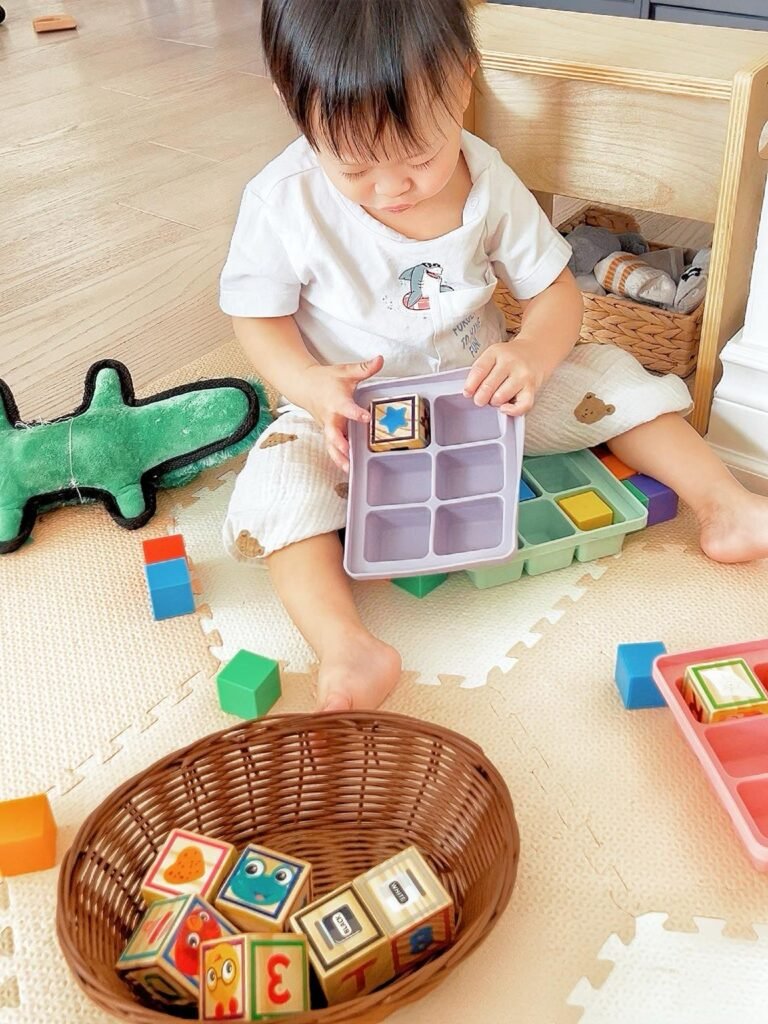
One of the activities my toddler really enjoys is the “Cubes Transfer from Basket to Tray” game. I simply gathered some cubes we already had at home—wooden stacking cubes and magnetic cubes—and placed them in a small basket. Then, I gave him an ice cube tray and encouraged him to pick up each cube and put it into a section of the tray. He loves transferring the cubes one by one and to make it more fun, I sometimes give him different coloured cubes and ask him to match them. It’s such a simple setup, but it keeps him engaged while learning important skills!
3. Stacking game:
What I use:
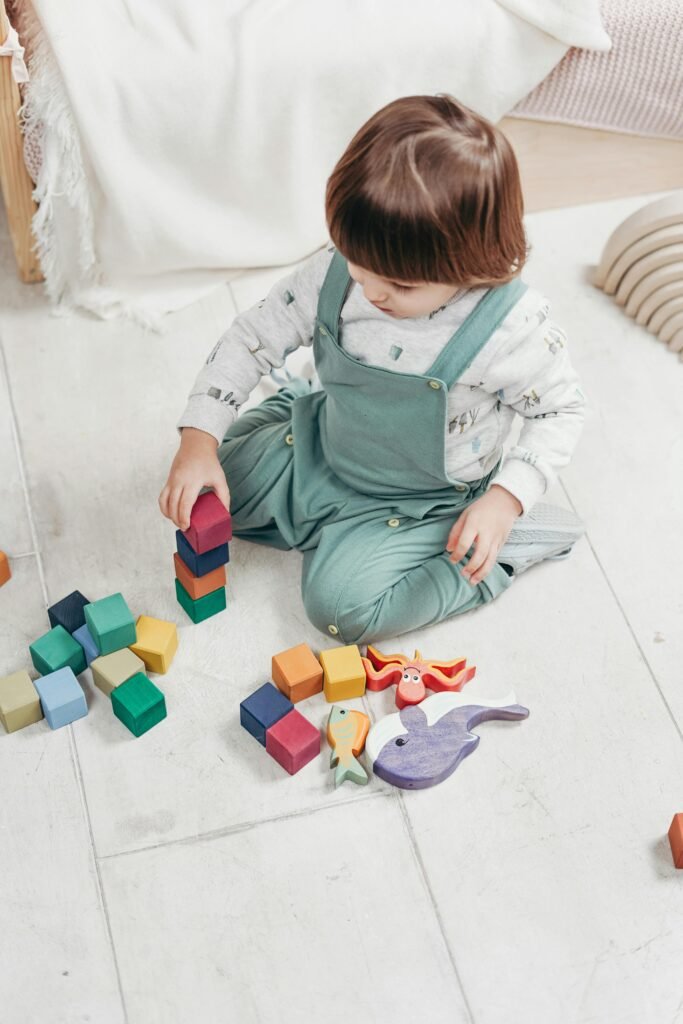
I love how versatile Wooden building blocks are for his development. Even at a young age, he enjoys exploring the different shapes, sizes, and textures by holding and touching them, which helps improve his fine motor skills and sensory awareness. At first, he simply stacked a few blocks, but over time, I noticed his hand-eye coordination and problem-solving abilities improving as he experimented with balance and height. Now, he loves using the blocks to build little towers and bridges, sparking his creativity and imagination. I also see how these blocks introduce early STEM concepts as he figures out how to balance and arrange them in different ways. Whether he’s stacking, sorting, or just knocking them down for fun, wooden blocks have provided endless opportunities for learning and play in our home!
4. Magnetic Games for Learning and Play
What I use:
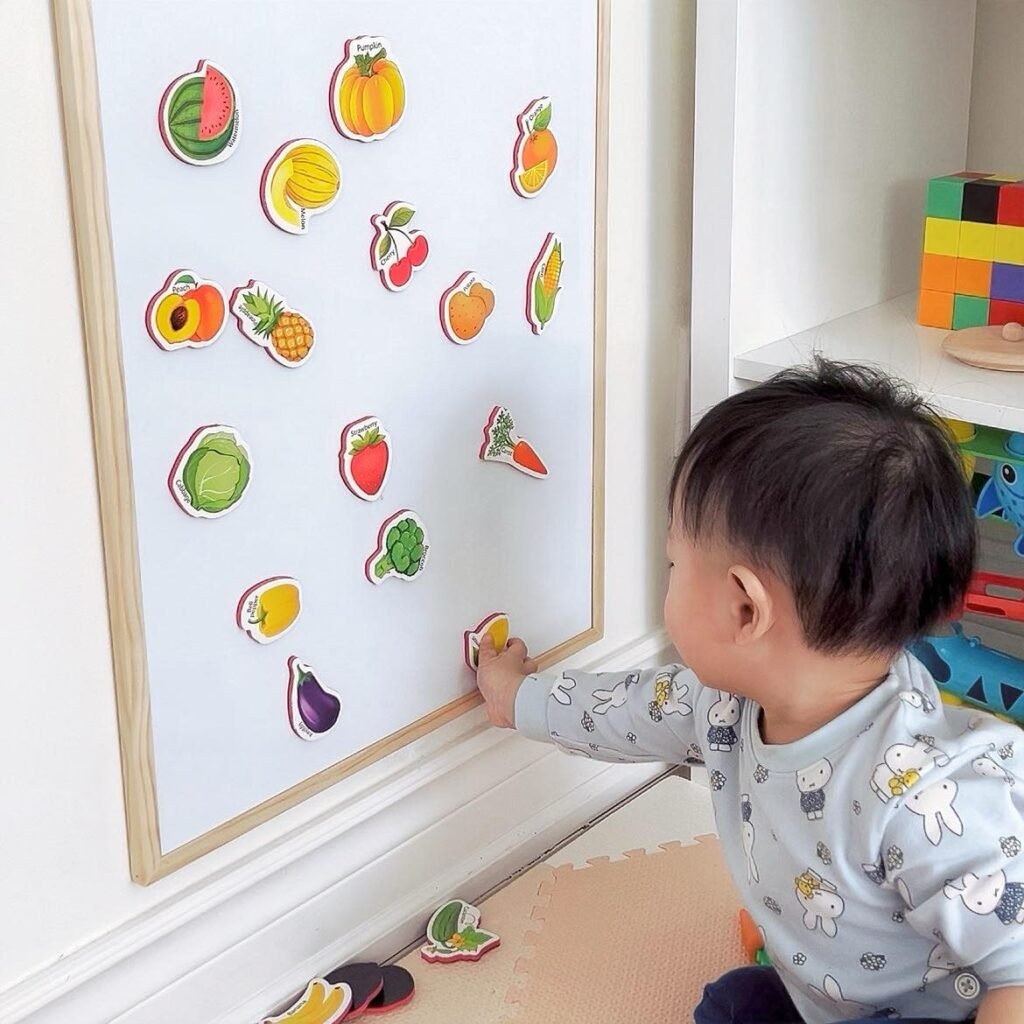
My kid loves sticking all his stickers on a magnetic board, making it one of his favorite activities. The board is lightweight, so I can easily put it on the wall or take it down whenever needed. To make playtime more engaging, I got my son various magnetic toys, such as magnetic cubes and magnetic tiles, which help improve fine motor skills and hand-eye coordination. I also introduced wooden magnetic animals and vegetable stickers to make learning fun while expanding his vocabulary in different languages. This simple setup not only encourages creativity and independent play but also supports early learning in a hands-on, interactive way.
5. Sensory Bins
What I use:
- Bins or Carton Box
- Shredded paper
- plush animals
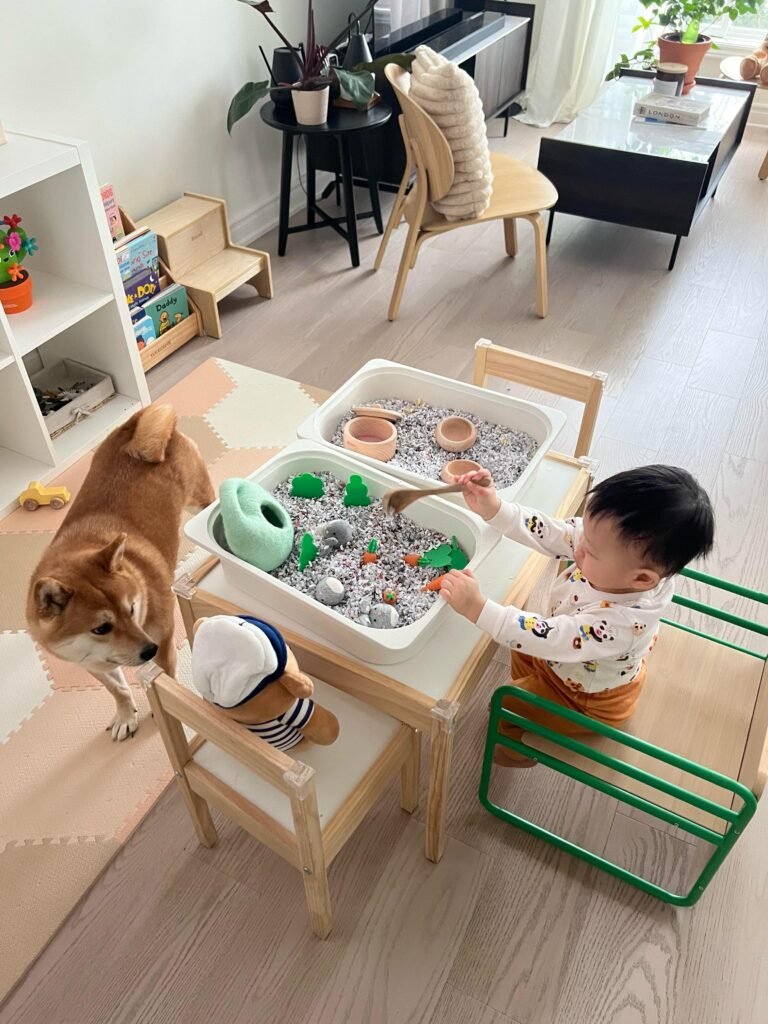
One of the best independent play activities I’ve set up for my toddler is a sensory bin rescue game. I used shredded paper from old documents to create a big, fluffy bin and hid small plush animals underneath. Then, I let my child dig through the paper to find and “rescue” the animals in his own way. He absolutely loved it! He spent an hour and a half fully focused on the game, exploring the textures, problem-solving, and using his fine motor skills to search for the hidden animals. It was amazing to see how engaged he was, and I love that this simple setup kept him entertained while also encouraging sensory exploration and creativity.
Incorporating Montessori-inspired toys and activities into my toddler’s playtime has been an amazing experience. Simple activities like Balls in a Box and Cubes Transfer have helped him develop fine motor skills and concentration, while wooden building blocks, magnetic toys, and sensory bins have sparked his creativity and problem-solving abilities. I’ve loved watching him play independently, completely focused and engaged, as he explores and learns at his own pace. Seeing his confidence grow through these hands-on experiences has shown me the value of independent play. With just a few simple materials and a bit of creativity, I’ve been able to create fun and educational activities that keep him entertained while supporting his development.
#MontessoriAtHome #ToddlerActivities #IndependentPlay #FineMotorSkills
#MontessoriToys #HandsOnLearning #ToddlerPlayIdeas #SensoryPlay #EarlyChildhoodDevelopment